If you need a more accessible version of this website, click this button on the right.Switch to Accessible Site
We take urgent walk-ins. Call to inquire

May 2025

Your feet are covered most of the day. If you're diabetic, periodic screening is important for good health. Numbness is often a sign of diabetic foot and can mask a sore or wound.

Tuesday, 27 May 2025 00:00

What to Do About Foot Blisters

Foot blisters are small pockets of fluid that form on the skin due to friction, heat, or moisture. They often appear after wearing new or tight shoes, walking long distances, or when feet get sweaty and rub against socks. A blister may feel sore, look swollen, and have clear fluid inside. It is best not to pop a blister, as the skin protects the area underneath from infection. Instead, keep it clean, dry, and covered with a soft bandage. Using blister pads can help reduce pressure while it heals. Wearing well-fitting shoes and moisture-wicking socks can help prevent future blisters. If a blister breaks, gently clean the area and apply an antibiotic ointment. If a blister becomes red, warm, or filled with pus, it could be infected. If your blister is painful or does not heal properly, it is suggested that you see a podiatrist for safe and effective treatment.

Blisters are prone to making everyday activities extremely uncomfortable. If your feet are hurting, contact one of our podiatrists of Bazzi Podiatry. Our doctors can provide the care you need to keep you pain-free and on your feet.

Foot Blisters

Foot blisters develop as a result of constantly wearing tight or ill-fitting footwear. This happens due to the constant rubbing from the shoe, which can often lead to pain.

What Are Foot Blisters?

A foot blister is a small fluid-filled pocket that forms on the upper-most layer of the skin. Blisters are filled with clear fluid and can lead to blood drainage or pus if the area becomes infected.

How Do Blisters Form?

Blisters on the feet are often the result of constant friction of skin and material, usually by shoe rubbing. Walking in sandals, boots, or shoes that don’t fit properly for long periods of time can result in a blister. Having consistent foot moisture and humidity can easily lead to blister formation.

Prevention & Treatment

It is important to properly care for the affected area in order to prevent infection and ease the pain. Do not lance the blister and use a Band-Aid to provide pain relief. Also, be sure to keep your feet dry and wear proper fitting shoes. If you see blood or pus in a blister, seek assistance from a podiatrist.

If you have any questions, please feel free to contact one of our offices located in Detroit, West Detroit, Northwest Detroit, Sterling Heights, Hamtramck, Dearborn Heights, Madison Heights, Redford, and Livonia, MI . We offer the newest diagnostic and treatment technologies for all your foot care needs.

Read more about Blisters
Tuesday, 20 May 2025 00:00

How Serious Is Intoeing in Children?

Intoeing, sometimes called pigeon toes, is when a child’s feet point inward instead of straight ahead when they walk. Intoeing  in young children is common but usually goes away as they grow. In most cases, intoeing does not cause pain or keep a child from walking, running, or playing. This condition can be caused by a twist in the lower leg bone, a rotation in the thigh bone, or a curved shape of the foot itself. A podiatrist can examine your child’s legs and feet, watch how they walk, and decide if the bones are still developing normally. Most children do not need treatment, but if bone positioning is severe or does not improve over time, special casts or surgery may be needed to correct alignment. If your child is intoeing, it is suggested that you schedule an appointment with a podiatrist for guidance and appropriate treatment.

The health of a child’s feet is vital to their overall well-being. If you have any questions regarding foot health, contact one of our podiatrists of Bazzi Podiatry. Our doctors can provide the care you need to keep you pain-free and on your feet.

Tips for Keeping Children's Feet Healthy

  • Make sure their shoes fit properly
  • Look for any signs of in-toeing or out-toeing
  • Check to see if they have Clubfoot (condition that affects your child’s foot and ankle, twisting the heel and toes inward) which is one of the most common nonmajor birth defects.
  • Lightly cover your baby’s feet (Tight covers may keep your baby from moving their feet freely, and could prevent normal development)
  • Allow your toddler to go shoeless (Shoes can be restricting for a young child’s foot)
  • Cut toenails straight across to avoid ingrown toenails
  • Keep your child’s foot clean and dry
  • Cover cuts and scrapes. Wash any scratches with soap and water and cover them with a bandage until they’ve healed.

If you have any questions, please feel free to contact one of our offices located in Detroit, West Detroit, Northwest Detroit, Sterling Heights, Hamtramck, Dearborn Heights, Madison Heights, Redford, and Livonia, MI . We offer the newest diagnostic and treatment technologies for all your foot care needs.

Read more about What to Do to Keep Your Child’s Feet Healthy
Tuesday, 13 May 2025 00:00

Managing a Stubborn Ingrown Toenail

An ingrown toenail may seem minor at first but can quickly become painful and inflamed. It often starts when the side of the nail presses into the skin, causing swelling or tenderness. This can happen from cutting nails too short, wearing tight shoes, or an injury. Soaking your foot in warm water a few times a day may bring relief. Avoid picking at the nail or digging into the skin, as this can lead to infection. If pain continues or the area looks red and filled with fluid, medical care is often needed. A podiatrist can gently trim or remove the problem part of the nail. In severe or recurring cases, a simple procedure may prevent it from growing inward again. If your toe remains sore or swollen, it is suggested you see a podiatrist for further care.

Ingrown toenails may initially present themselves as a minor discomfort, but they may progress into an infection in the skin without proper treatment. For more information about ingrown toenails, contact one of our podiatrists of Bazzi Podiatry. Our doctors can provide the care you need to keep you pain-free and on your feet.

Ingrown Toenails

Ingrown toenails are caused when the corner or side of a toenail grows into the soft flesh surrounding it. They often result in redness, swelling, pain, and in some cases, infection. This condition typically affects the big toe and may recur if it is not treated properly.

Causes

  • Improper toenail trimming
  • Genetics
  • Improper shoe fitting
  • Injury from pedicures or nail picking
  • Abnormal gait
  • Poor hygiene

You are more likely to develop an ingrown toenail if you are obese, have diabetes, arthritis, or have any fungal infection in your nails. Additionally, people who have foot or toe deformities are at a higher risk of developing an ingrown toenail.

Symptoms

Some symptoms of ingrown toenails are redness, swelling, and pain. In rare cases, there may be a yellowish drainage coming from the nail.

Treatment

Ignoring an ingrown toenail can have serious complications. Infections of the nail border can progress to a deeper soft-tissue infection, which can then turn into a bone infection. You should always speak with your podiatrist if you suspect you have an ingrown toenail, especially if you have diabetes or poor circulation.

If you have any questions, please feel free to contact one of our offices located in Detroit, West Detroit, Northwest Detroit, Sterling Heights, Hamtramck, Dearborn Heights, Madison Heights, Redford, and Livonia, MI . We offer the newest diagnostic and treatment technologies for all your foot care needs.

Read more about Ingrown Toenail Care

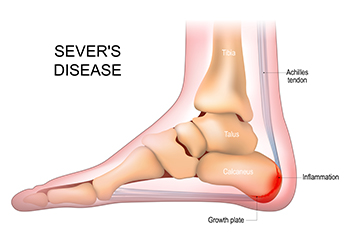
Sever's disease, also known as calcaneal apophysitis, is an inflammatory condition that affects the growth plate in the heel bone. It is typically seen in children and adolescents who are experiencing growth spurts and engaging in repetitive physical activity. The causes in young patients include overuse, excessive running or jumping, and wearing poor footwear. In adults, Symptoms often involve heel pain, tenderness, and stiffness, especially after activity. Sever's disease is extremely rare because the growth plates close after puberty. When heel pain occurs in adults, it is usually caused by other conditions, such as plantar fasciitis or Achilles tendinitis, rather than true Sever's disease. It is suggested that adults with similar heel pain symptoms consult a podiatrist to determine the correct diagnosis and begin an appropriate treatment plan.

Sever's disease often occurs in children and teens. If your child is experiencing foot or ankle pain, see one of our podiatrists from Bazzi Podiatry. Our doctors can treat your child’s foot and ankle needs.

Sever’s Disease

Sever’s disease is also known as calcaneal apophysitis, which is a medical condition that causes heel pain I none or both feet. The disease is known to affect children between the ages of 8 and 14.

Sever’s disease occurs when part of the child’s heel known as the growth plate (calcaneal epiphysis) is attached to the Achilles tendon. This area can suffer injury when the muscles and tendons of the growing foot do not keep pace with bone growth. Therefore, the constant pain which one experiences at the back of the heel will make the child unable to put any weight on the heel. The child is then forced to walk on their toes.

Symptoms

Acute pain – Pain associated with Sever’s disease is usually felt in the heel when the child engages in physical activity such as walking, jumping and or running.

Highly active – Children who are very active are among the most susceptible in experiencing Sever’s disease, because of the stress and tension placed on their feet.

If you have any questions, please feel free to contact one of our offices located in Detroit, West Detroit, Northwest Detroit, Sterling Heights, Hamtramck, Dearborn Heights, Madison Heights, Redford, and Livonia, MI . We offer the newest diagnostic and treatment technologies for all your foot care needs.

Read more about Sever's Disease
Our Hospital Affiliations
dmc logoascension st. john hospital logocornwell health logowayne state university logoamerican board of foot and ankle surgery logo